Drinkaware and MOD
Sharing experiences with friends, family, or support services can make it easier to face life’s ups and downs without relying on alcohol.
Share your thoughts on your drinking habits and what kind of support would work for you if you were thinking about making changes.
Take our 6-minute survey for a chance to win a £100 voucher. Take the survey

Sharing experiences with friends, family, or support services can make it easier to face life’s ups and downs without relying on alcohol.
The unique demands of military life, both for personnel and their families, can increase the risk of harmful alcohol use, and we know that alcohol consumption within the Armed Forces is higher than in the general UK population. We know that drinking alcohol to harmful levels often interacts with other lifestyle behaviours such as smoking and sleep, and that work and homelife stressors can often make it challenging to change behaviours. Defence wide policy builds on the UK government’s alcohol strategy but applies this to the Defence environment – with the aim of supporting and ensuring a healthy and productive Defence workforce.
Defence promotes low and alcohol free options being a choice for personnel and being available at service functions and facilities. Previous health promotion campaigns have centred on this topic and work continues to be done across Defence to increase access to low and alcohol free drink options as part of the wider Defence Alcohol reduction programme.
JSP 770 outlines the variety of Welfare support options available to service persons and their eligible family members, depending on location and circumstance. This will include options for unit welfare support, such as via a unit welfare or pastoral team. If you are unsure on who your Unit Welfare Team are please ask your Line Manager, another member of the chain of command, or your local admin office who will be able to signpost you appropriately. If you are in an Army regiment your unit should also have an appointed Unit Alcohol Advisor who you can request to speak to.
Specialist Defence welfare support:
Alternatively, there are a number of specialist welfare services available that you can self-refer to should you wish. This includes an option for Civil Servants. Contact details are as follows:
Royal Navy Family and People Support - Royal Navy Forum and Families and veterans
Employee Assistance Programme (EAP) 24/7 helpline: 0800 731 8629 (UK) or +44 330 008 5959 (outside UK)
In addition to the above options there are a number of other national and charitable organisations and services from who Defence personnel and their families can seek information and support related to alcohol use. These include:
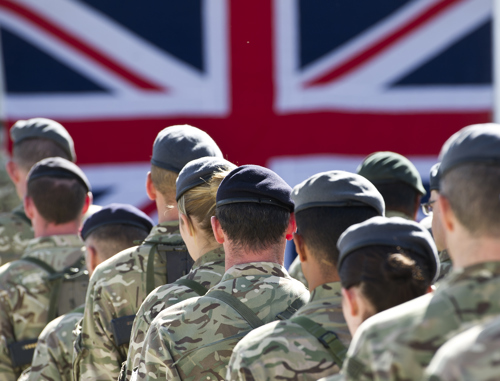
Image copyright acknowledgement AndrewMorris@crowncopyright2025
We asked personnel to share their stories about how switching to low and no alcohol free drinks has had a positive impact on their lives, watch to find out
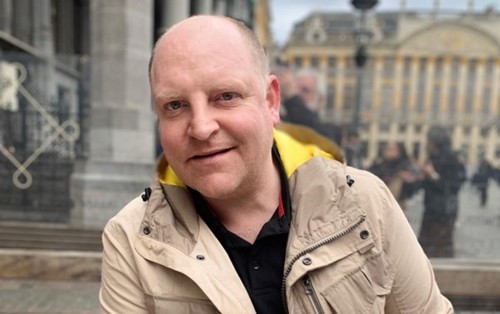
Mr Anthony Riley – European Welfare Officer, Global Support Organisation
I joined the Army straight from school in 1998 when I was 16 years old. I went to basic training, joined the Infantry, and then was posted straight out to Northern Ireland. I served 24 years in the Infantry in total and retired in 2022 as a Colour Sergeant. My last uniformed role was as a Unit Welfare Officer, so particularly in this job I had a lot of dealings with soldiers who needed support related to alcohol. I definitely saw the culture around alcohol in the military change during my time in the military. It used to be encouraged to drink lots of alcohol, but that’s not the case anymore. Of course the cost of living has had an impact, but young people are also much more aware of the negative impacts of alcohol now, and there are more expectations from the chain of command that people can’t let alcohol affect their ability to turn up to work and do their job. Around the messes you also see more and more advertising about cutting down on alcohol, and also messaging about drink driving and its consequences, which is good.
When I retired I joined the Civil Service as a Welfare Officer for the Global Support Organisation based in mainland Europe. Within this role I have also had the opportunity to undertake my Alcohol Advisors Course and so am now the Unit’s Alcohol Advisor as well. My previous experience in the military has certainly helped me in my new role, though of course the supported population is a bit different now from an Infantry regiment. I now support service persons and family members spread all over the continent, and so do a lot of my role remotely not just in person.
Both whilst in the Infantry and as a Civil Servant I have seen the impact that harmful use of alcohol can have on people’s work and lives. I totally understand that it can feel difficult to reach out for support when struggling with alcohol but I would encourage people to do so as early as possible. I have seen many people really turn around their lives as a result of seeking help, whether that is from the Welfare team or the Medical Centre. As an alcohol advisor I can either signpost people onto other teams such as the Medical Centre, or work with them directly one to one over a period of time to talk about their drinking habits, undertake alcohol journals for example, and work with them to try to build new healthier lifestyle behaviours.
As an Alcohol Advisor I also deliver regular briefs around Alcohol Awareness and education, both to service persons and family members – we want to reach as many people as we can and ensure everyone knows how to reach us if they need.
We are always looking for Defence people to share their experiences of getting help or supporting others with their alcohol behaviours, in order to encourage more people to reach out and seek support. Below are a couple of personal stories. If you would like to share your story to help others please get in touch with the Defence Public Health Unit at sg-dmed-med-dphu-gpmailbox@mod.gov.uk and ask to speak to SO2 Public Health.

Switching a standard alcoholic drink for a low or alcohol-free version could help you cut your drinking and improve your health – here’s what you need to know.
Find out more

Being out in hot weather can be dangerous in its own right - adding alcohol into the mix increases your risk of dehydration, heat exhaustion or heat stroke. Here’s some advice to reduce your risks when drinking in the heat.
Find out more
Low and alcohol-free drinks are substitutes for standard alcoholic drinks like beer, wine, cider, or spirits like gin. They are marketed and promoted as a replacement for these standard drinks, so aim to recreate their taste, look and feel – they often have similar looking adverts, cans or bottles.
The main difference between alcoholic, low alcohol and alcohol-free beer is the amount of alcohol they contain:
Choosing a low alcohol drink can improve your health and be an effective way to cut your overall alcohol consumption.
In the UK, government guidance says drinks labelled as ‘low alcohol’ can contain up to 1.2% alcohol by volume (ABV). So, one 500ml can of 1.2% ABV low alcohol beer contains 0.6 units of alcohol (that's just over half a unit).
Substituting low alcohol products for standard alcoholic drinks only works if you don’t add low alcohol products to any alcohol you usually drink, otherwise you’ll be drinking more alcohol in total - not less. It’s also important to remember that low alcohol drinks are often still high in sugar – so they aren’t automatically a ‘healthy’ or low-calorie choice.
These days, there are more alcohol-free drinks to choose from than ever before. And we’re not talking about soft drinks like lemonade, fruit juice or water.
Government guidance in England says that alcohol-free drinks may contain up to 0.05% ABV (alcohol by volume).3 So, a 500ml can of a 0.05% ABV drink would contain 0.025ml of alcohol - one fortieth (1/40) of a unit of alcohol.
Because they have less alcohol in them, switching from full-strength to alcohol-free can be a good way to cut your units - but only if you aren’t adding them on top of any alcohol you usually drink.
Being out in hot weather can be dangerous in its own right - adding alcohol into the mix increases your risk of dehydration, heat exhaustion or heat stroke.
It’s important to stay safe if you are planning to drink during hot weather. Here’s some advice to reduce your risks when drinking in the heat.

